
Nova Scotia's Non-Resident Provincial Deed Transfer Tax (PDTT) can significantly increase your closing costs. However, if you plan to move to Nova Scotia and establish residency within six months, you may qualify for a full exemption.
Here's what the tax is, who it applies to, and what buyers should know before making an offer.
What Is the Non-Resident Provincial Deed Transfer Tax?
The Non-Resident Provincial Deed Transfer Tax is a one-time tax charged on certain residential property purchases made by people who are not residents of Nova Scotia.The tax is charged in addition to the municipal deed transfer tax that buyers normally pay when purchasing a property.
The rate is 10% of the greater of:
- The purchase price
- The assessed value of the property
- Single-family homes
- Condominiums
- Properties with up to three dwelling units
- Vacant land intended for residential development
To put that into perspective, a buyer from outside Nova Scotia purchasing a $600,000 home or cottage could pay an additional $60,000 in Non-Resident Provincial Deed Transfer Tax on top of their other closing costs. For more information click the link below:
Non-resident Provincial Deed Transfer Tax
Moving to Nova Scotia? You May Qualify for an Exemption
One detail that's often missed is the exemption available to buyers who actually relocate to Nova Scotia.Individuals who establish Nova Scotia residency within six months of closing may qualify for an exemption from the Non-Resident Provincial Deed Transfer Tax. To qualify, buyers must provide documentation showing that they have become Nova Scotia residents.
This may include:
- A Nova Scotia driver's licence
- A Nova Scotia health card
- Utility bills
- Other supporting documentation
For complete details on eligibility requirements and documentation, visit the Province of Nova Scotia's Non-Resident Provincial Deed Transfer Tax information page, link above.
How Does Nova Scotia Compare to Other Provinces?
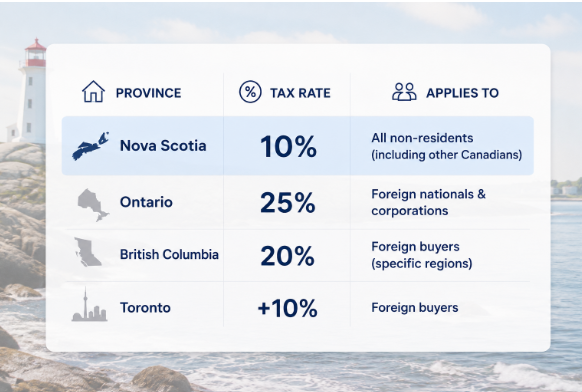
Nova Scotia stands out from other provinces because its 10% Non-Resident Provincial Deed Transfer Tax applies to all non-residents, including Canadians from other provinces. Most other provinces only target foreign (international) buyers.Why Was the Tax Introduced?
Like many parts of Canada, Nova Scotia experienced a significant increase in housing demand during and after the pandemic.The province has stated that the tax is intended to help improve housing affordability and availability for Nova Scotians by reducing competition from out-of-province buyers purchasing second homes, cottages, and investment properties.
Supporters believe the tax gives local buyers a better opportunity to compete in the housing market.
Critics argue that it may discourage investment and make Nova Scotia less attractive to some prospective buyers.
Final Thoughts
The 10% Non-Resident Provincial Deed Transfer Tax can have a significant impact on the cost of purchasing property in Nova Scotia. However, buyers who are planning a genuine move to the province may qualify for an exemption if they establish residency within six months of closing.If you're considering a move to Nova Scotia, it's worth understanding the rules before you begin your search. A local real estate lawyer can help you determine how the tax and exemption may apply to your specific situation.
Thinking About a Move to Nova Scotia?
Understanding the costs of buying a home is only one part of the process. Choosing the right community is often the bigger decision.If you're researching different areas of Nova Scotia, you may also find these guides helpful: